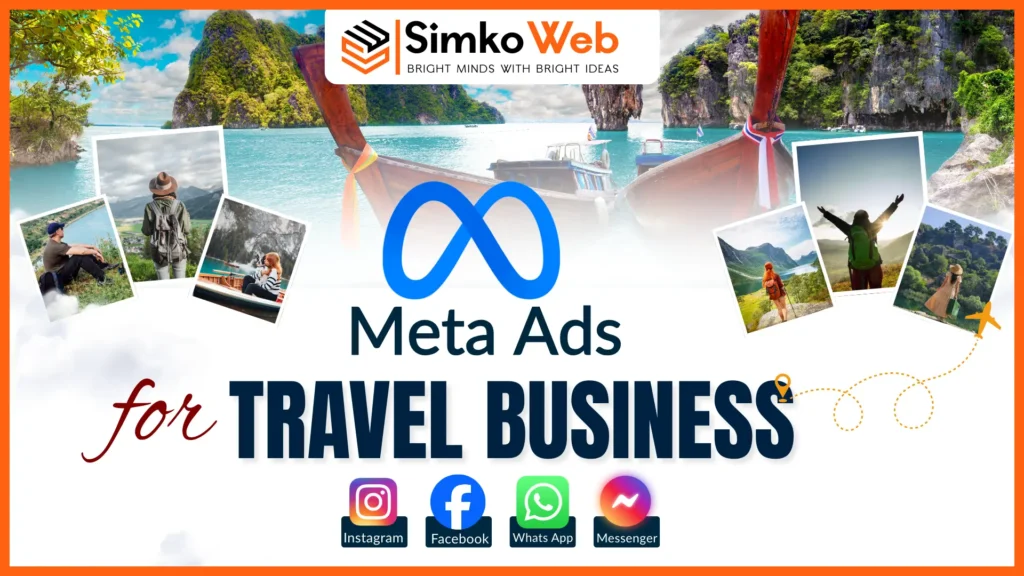
- Meta Ads for Travel Businesses: Strategic Guide to Boost Your Bookings in 2026
- Why Meta Ads Matter for Travel Agencies and Tourism Businesses
- Understanding the Meta Advertising Ecosystem for Travel Marketing
- Strategic Framework for Meta Ads for Travel Businesses
- Proven Meta Advertising Strategies for Travel Agencies and Tour Operators
- Optimizing Your Meta Ads for Travel in Major Indian Metro Cities and Tourism States
- SEO for Travel Business and Paid Social Integration
- Measuring Success: KPIs and Optimization for Meta Ads for Travel
- Advanced Strategies: Automation and AI in Travel Marketing
- Why Partner with Simko Web for Your Meta Ads for Travel Business Strategy
- Conclusion
- Meta Ads for Travel Businesses
Meta Ads for Travel Businesses: Strategic Guide to Boost Your Bookings in 2026
The travel industry is booming, but the competition is fiercer than ever. To stand out and capture the attention of potential travelers, you need more than just a website—you need a strategic approach to Meta ads for travel businesses. Facebook and Instagram, powered by Meta’s advanced algorithms, offer unmatched opportunities to reach travelers at every stage of their journey, from inspiration to booking.
In 2026, travel businesses that leverage Meta ads for travel strategically will dominate their markets. Whether you’re a travel agency in Delhi, a tour operator in Rajasthan, or a hospitality business in Kerala, Meta advertising has become essential to your success. This comprehensive guide reveals the proven strategies that successful travel businesses use to convert browsers into bookers.
Why Meta Ads Matter for Travel Agencies and Tourism Businesses
The statistics speak for themselves. Facebook and Instagram ads have a 10% higher conversion rate for travel-related services compared to other industries. Moreover, 87% of millennials turn to social media for travel inspiration before making booking decisions. This means your potential customers are already scrolling through Meta platforms—you just need to reach them with the right message.
Online marketing for travel agencies has transformed dramatically. Traditional approaches simply don’t work anymore. Travel consumers expect personalized experiences, visual storytelling, and instant information. Meta ads for travel businesses deliver exactly this. With billions of active users worldwide, Meta platforms provide unparalleled access to travelers across every demographic.
The beauty of Meta advertising for travel lies in its precision. You’re not broadcasting to everyone; you’re targeting specific audiences based on their interests, behaviors, location, and previous interactions with your brand. This targeted approach means lower costs and higher returns.
Understanding the Meta Advertising Ecosystem for Travel Marketing
Meta’s ecosystem includes Facebook, Instagram, Audience Network, and Messenger. Each platform serves a distinct purpose in your travel marketing strategy. Understanding where your audience spends time and which platforms deliver the best ROI for your travel business marketing is crucial.
Facebook: The Lead Generation and Retargeting Champion
Facebook remains the powerhouse for travel businesses. With advanced targeting capabilities, Facebook is ideal for lead generation and retargeting campaigns. Travel agencies benefit tremendously from Facebook’s detailed audience segmentation, which allows you to target by age, interests, travel behaviors, and past website interactions.
Online marketing for travel agencies on Facebook works best with a multi-step approach. First, you capture interest through awareness campaigns. Then, you nurture those leads with targeted messages and special offers. Finally, you use retargeting to bring back visitors who didn’t convert on their first visit. This funnel approach can double or triple your ROI compared to cold audience campaigns.
Instagram: Visual Storytelling and Engagement
Instagram is where travel dreams are born. The platform’s visual-first nature makes it perfect for showcasing stunning destinations, luxury accommodations, and unforgettable experiences. Instagram Reels and Stories generate higher engagement rates than static posts, making them ideal for travel content.
For travel agency marketing, Instagram ads that feature carousel formats perform exceptionally well. A day-by-day itinerary showcased through multiple carousel cards tells a compelling story and keeps viewers engaged longer, increasing the likelihood of clicking through to your booking page.
Strategic Framework for Meta Ads for Travel Businesses
Success with Meta ads for travel requires more than just creating ads and hoping they work. You need a strategic framework built on understanding your audience, crafting compelling messages, and continuously optimizing based on data.
Step 1 – Define Your Audience and Travel Segments
Before launching any Meta ads for travel businesses campaign, you must clearly understand who you’re targeting. Travel audiences aren’t one-size-fits-all. Consider these key traveler segments:
- Adventure Seekers: Looking for trekking, water sports, and adrenaline-pumping activities
- Cultural Explorers: Interested in heritage sites, temples, and local experiences
- Luxury Travelers: Seeking premium accommodations and high-end experiences
- Family Vacationers: Planning affordable, kid-friendly trips
- Wellness Retreats: Looking for yoga, Ayurveda, and relaxation packages
Your online marketing for travel agencies strategy must address these segments with tailored messages and offers. Use Meta’s Custom Audiences and Lookalike Audiences to expand your reach within each segment.
Step 2 – Craft Emotionally Resonant Creative Content
Travel is inherently emotional. Your Meta ads for travel must tap into the desire for escape, adventure, relaxation, and connection. Instead of listing features (“5-star hotel, air conditioning, beach access”), paint a vivid picture of the experience (“Wake up to the gentle sound of ocean waves, sip your coffee on a private balcony overlooking turquoise waters, and watch the sunset paint the sky in shades of gold and purple”).
Use high-quality images and videos. Travel videos on Meta generate 12 times more shares than text and images combined. Carousel ads work exceptionally well—they allow you to tell a multi-part story, showcase different aspects of a trip, or present day-by-day itineraries.
Step 3 – Implement Strategic Budget Allocation for Travel Advertising
Most travel businesses allocate nearly 50% of their digital marketing budget toward paid social media advertising. Within your Meta ads for travel budget, consider this allocation:
- 40% to retargeting campaigns (warm audiences who’ve already shown interest)
- 35% to awareness and interest campaigns (reaching new audiences)
- 15% to lead generation and conversion campaigns (direct booking focus)
- 10% to testing and experimentation (finding new winning combinations)
This allocation maximizes ROAS (Return on Ad Spend) because retargeting typically costs less and converts better than cold traffic.

Proven Meta Advertising Strategies for Travel Agencies and Tour Operators
Retargeting: Bringing Warm Leads Back to Convert
The most cost-effective strategy for Meta ads for travel is retargeting. Most travelers don’t book on their first website visit. They research, compare, and deliberate. Retargeting ads remind them of that incredible destination they were considering.
Set up retargeting audiences based on specific actions:
- Website visitors who viewed destination pages but didn’t book
- Users who added items to their cart but abandoned
- People who downloaded your travel brochure or itinerary
- Visitors who spent more than 30 seconds on your site
Retargeting campaigns for travel business marketing typically generate 2-3 times higher conversion rates than cold traffic campaigns because you’re reaching people who already know your brand and have shown explicit interest.
Carousel Ads: Tell Your Travel Story
Carousel ads are perfect for online marketing for travel agencies. These ads allow 10 images, each with its own headline, description, and link. You could create a carousel showing:
- Day 1: Arrival and hotel check-in
- Day 2: City tour and cultural experiences
- Day 3: Adventure activity
- Day 4: Wellness and relaxation
- Day 5: Departure
Each card tells part of the story, keeping viewers engaged and moving them progressively closer to the booking decision.
Video Ads and Reels: Capture Attention Instantly
Instagram Reels and Facebook video ads capture attention within the first 3 seconds. Your Meta ads for travel videos should immediately showcase something visually stunning—a mountain sunrise, a pristine beach, a temple’s architectural beauty. Use quick cuts, dynamic music, and text overlays to maintain engagement.
Keep videos between 15-60 seconds. Longer videos can work for awareness campaigns, but shorter videos drive faster conversions for travel business marketing.
Optimizing Your Meta Ads for Travel in Major Indian Metro Cities and Tourism States
India’s tourism landscape is diverse, with each region attracting different types of travelers. Your Meta ads for travel strategy should reflect regional preferences and seasonality.
Delhi and National Capital Region
Delhi remains India’s most visited destination, attracting history enthusiasts and cultural tourists. Campaigns should highlight historical monuments (India Gate, Qutub Minar, Jama Masjid) and cultural experiences. SEO for travel business in Delhi should focus on keywords like “heritage tours Delhi,” “cultural packages,” and “historical monuments tours.”
Rajasthan: The Land of Palaces and Golden Sands
Rajasthan, with its stunning forts, palaces, and desert landscapes, attracts both domestic and international tourists. Campaigns targeting Rajasthan should emphasize the romance and adventure of cities like Jaipur (home to the Palace of Winds – Hawa Mahal), Udaipur (Lake Palace), and Jaisalmer (The Golden City). Meta ads for travel in this region should feature carousel ads showcasing the day-by-day journey through multiple cities.
Kerala: God’s Own Country
Kerala’s backwaters, houseboat cruises, and ayurvedic wellness retreats make it ideal for luxury and wellness-focused Meta advertising for travel. Campaigns should target wellness seekers and luxury travelers with stunning visuals of backwaters, tea plantations, and beaches. Video ads showcasing houseboat sunsets perform exceptionally well.
Himachal Pradesh and Uttarakhand: Mountain Adventures
These Himalayan states attract adventure seekers, nature lovers, and spiritual tourists. Campaigns should emphasize trekking, skiing (Auli), river rafting, and meditation retreats. The states aim to double tourist inflow by 2030, creating significant opportunities for travel businesses. Seasonal campaigns should adjust budgets based on peak seasons (summer for adventure, winter for skiing).
Goa and Coastal Destinations
Goa attracts beach lovers and party-goers. Meta ads for travel targeting Goa should emphasize beach clubs, water sports, and beachfront resorts. Instagram Stories and Reels work particularly well for this demographic, showing the vibrant nightlife and beach culture.
Mumbai: The City of Dreams
Mumbai attracts business travelers and luxury seekers. Campaigns should highlight 5-star hotels, Bollywood experiences, and fine dining. Instagram ads showcasing the Gateway of India and Marine Drive sunset cruises perform well.
SEO for Travel Business and Paid Social Integration
While Meta ads for travel drives immediate results, SEO for travel business ensures long-term visibility. The best travel marketing strategy combines both approaches.
When someone becomes interested in your Meta ads for travel campaign, they land on your website. If that website isn’t optimized for SEO, they’ll bounce. Your landing pages should:
- Include target keywords naturally throughout the content
- Have fast loading speeds (under 2 seconds)
- Be mobile-responsive
- Feature clear calls-to-action and booking buttons
- Include customer reviews and testimonials
Integration between paid and organic strategies means your online marketing for travel agencies becomes more efficient—paid ads drive traffic, while SEO ensures that traffic converts.
Measuring Success: KPIs and Optimization for Meta Ads for Travel
Running Meta ads for travel is only effective if you’re tracking and optimizing based on performance data. Key metrics to monitor include:
Click-Through Rate (CTR): The percentage of people who click your ad. A good CTR for travel ads is 1-2%.
Cost Per Click (CPC): How much you pay for each click. Varies by targeting and placement, typically $0.50-$2.50 for travel.
Conversion Rate: The percentage of people who complete your desired action (booking, lead form submission). A 2-3% conversion rate on travel ads is excellent.
Return on Ad Spend (ROAS): Revenue generated for every dollar spent on ads. Aim for a minimum 3:1 ROAS.
Cost Per Booking: The actual cost to acquire each customer. This varies based on trip price but should typically be 10-15% of the booking value.
Use Meta Ads Manager’s detailed reporting to track these metrics. A/B test different elements—headlines, images, videos, audience segments, and placements—to identify what works best for your Meta advertising for travel.
Advanced Strategies: Automation and AI in Travel Marketing
Meta’s Andromeda algorithm (introduced in 2025) represents a significant shift in how ads are matched with users. Unlike previous systems relying on demographic targeting alone, Andromeda uses machine learning to evaluate creative relevance at scale.
For Meta ads for travel, this means:
- Feed the algorithm more creative variations and it will find better matches
- Real-time signals matter more than static demographic targeting
- Winning creatives change frequently—test faster and iterate quicker
- Automation through Advantage+ campaigns can outperform manual bidding
Brands that adapt quickly to these algorithmic changes gain a significant competitive advantage.
Why Partner with Simko Web for Your Meta Ads for Travel Business Strategy
While understanding Meta ads for travel is valuable, execution is everything. Simko Web is India’s premier digital marketing agency, specializing in helping travel businesses across all major metro cities and states maximize their bookings through strategic Meta advertising for travel.
Our expertise includes:
Deep Industry Knowledge: We understand the unique challenges of travel businesses—seasonal fluctuations, complex customer journeys, and diverse geographic markets.
Strategic Campaign Development: We don’t just run ads; we build complete strategies aligned with your business goals. Whether your focus is SEO for travel business or paid social, we integrate all channels.
Performance-Driven Approach: Every campaign is built on data. We continuously test, analyze, and optimize your Meta ads for travel to maximize ROAS.
Geographic Expertise: With proven experience across Delhi, Mumbai, Goa, Kerala, Rajasthan, Himachal Pradesh, Uttarakhand, and beyond, we understand regional tourist preferences and seasonal trends.
Comprehensive Services: Beyond Meta advertising for travel, we offer online marketing for travel agencies including SEO, content marketing, email campaigns, and social media management.
At Simko Web, we’ve helped dozens of travel agencies and tour operators transform their bookings through strategic Meta ads for travel. Our clients consistently see 2-3x increases in conversion rates and 40-50% reductions in cost per booking within the first three months.
Conclusion
Meta ads for travel businesses represent one of the most powerful opportunities to reach travelers at scale. By combining strategic targeting, emotionally resonant creative, smart budget allocation, and continuous optimization, travel agencies and tour operators can dramatically increase bookings.
Whether you’re a small travel agency in Delhi or a large tour operator spanning multiple states, the strategies outlined in this guide apply to your business. Start with retargeting campaigns to maximize your current ROI, then expand to awareness campaigns to grow your audience.
The travel industry is evolving rapidly. Consumers expect personalized experiences and instant information. Meta ads for travel deliver exactly this, making it essential for any travel business serious about growth.
Ready to transform your travel business with strategic Meta advertising for travel? Partner with Simko Web, India’s trusted digital marketing agency for travel businesses. We’ll help you craft campaigns that convert, optimize your budget allocation, and dominate your market across all major Indian cities and states.
Contact Simko Web today for a free consultation on how Meta ads can accelerate your travel business growth.

Meta Ads for Travel Businesses
Q 1: What’s the Minimum Budget Required to Start Meta Ads for Travel Businesses?
Answer: You can start with as little as 250-500 per day for testing purposes. However, for meaningful results, travel businesses should allocate at least 15000-20000 per month to a specific campaign to gather sufficient data for optimization. Most successful travel agencies allocate 20000-25000 monthly for Meta ads for travel. The key is starting small, testing what works, then scaling budgets toward winning combinations. Start with retargeting campaigns, which typically deliver results even on smaller budgets.
Q 2: How Long Does It Take to See Results from Meta Ads for Travel?
Answer: You may see initial results within the first 2-3 days of launching your Meta ads for travel. However, most campaigns require 1-2 weeks of consistent spending to generate enough data for meaningful optimization. Facebook’s algorithm typically needs 50-100 conversions before it learns your audience effectively. For travel businesses, where booking cycles can be longer, expect 2-4 weeks to see significant booking volume. Retargeting campaigns typically convert faster than cold traffic campaigns.
Q 3: Which Meta Ads Placement Works Best for Travel Agencies?
Answer: The best placements for Meta ads for travel include Instagram Feed, Instagram Stories, Instagram Reels, and Facebook Newsfeed. Video placements typically outperform static images for travel content. Carousel ads work particularly well for travel itineraries. Advantage+ placements (where Meta automatically optimizes placement) often deliver better ROAS than manually selected placements. Test different placements, but initially, allocate 60% to Stories and Reels, 30% to Feed placements, and 10% to other formats.
Q 4: How Do I Target the Right Audience for My Travel Business Marketing?
Answer: For online marketing for travel agencies, start with detailed targeting: age (typically 25-65 for travel), interests (travel, tourism, adventure), and behaviors (past travel bookings, travel-related website visits). Create Custom Audiences from your email list and website visitors using the Facebook Pixel. Build Lookalike Audiences based on your best customers. Create separate campaigns for different travel segments (adventure seekers, luxury travelers, family vacationers). The more specific your targeting, the higher your conversion rates. Use value rules to increase bids in high-performing geographic locations.
Q 5: What’s the Ideal Budget Allocation for Retargeting vs. New Audience Campaigns?
Answer: Allocate 60% of your Meta ads for travel budget to retargeting campaigns and 40% to awareness campaigns targeting new audiences. Retargeting costs 30-50% less than cold traffic while converting 2-3x better. However, you need consistent new audience campaigns to build your retargeting pool. Start with this 60/40 split, then adjust based on your ROAS data. If retargeting performs exceptionally well (5:1 ROAS), increase its allocation to 70%.
Q 6: How Can I Reduce My Cost Per Booking on Meta Ads for Travel?
Answer: Reducing cost per booking requires multi-channel optimization: (1) Improve targeting precision—use Custom and Lookalike Audiences; (2) Enhance creative quality—use video and carousel ads instead of static images; (3) Optimize your landing page—ensure fast loading and clear booking paths; (4) Focus on retargeting—lower costs and higher conversion rates; (5) Implement value rules—increase bids for high-performing geographic areas; (6) A/B test continuously—identify winning ad variations and scale them. Simko Web helps travel businesses typically reduce cost per booking by 40-50% within three months.
Q 7: Should Travel Agencies Use Video or Carousel Ads for Meta Advertising?
Answer: Use both, but allocate budgets strategically. Video ads (especially Reels) generate higher engagement and reach on Instagram, making them ideal for awareness campaigns. They capture attention quickly and work well for storytelling. Carousel ads are excellent for conversion campaigns because they allow detailed product showcase (day-by-day itinerary) and multiple CTA opportunities. For optimal Meta ads for travel results, allocate 50% to video, 35% to carousel, and 15% to static images. Test what works for your specific audience and adjust allocation accordingly.
Q 8: How Often Should I Update or Refresh My Travel Ads Creatives?
Answer: Refresh your creatives every 1-2 weeks. Meta’s Andromeda algorithm rewards creative diversity and freshness. As creatives age, engagement typically declines (called “ad fatigue”). For Meta ads for travel, maintain a constant pipeline of new video, carousel, and image variations. Create at least 3-5 different ad variations per campaign. Test new creative angles continuously. Monitor your CTR—when it drops below your campaign average, that’s a signal to refresh. Simko Web typically tests 10-15 creative variations per campaign monthly.
Q 9: What Role Does Facebook Pixel Integration Play in Optimizing Meta Ads for Travel?
Answer: The Facebook Pixel (part of Meta’s tracking infrastructure) is crucial for optimizing Meta ads for travel. It tracks user behavior on your website—which pages they visit, items they add to cart, bookings completed. This data allows Meta’s algorithm to optimize your campaigns and helps you build Custom Audiences for retargeting. Ensure your Pixel is properly installed, configured for key events (View Content, Add to Cart, Purchase), and connected to your audience lists. The better your tracking, the smarter Meta’s optimization becomes, leading to better ROAS.
Q 10: How Does Seasonal Variation Affect Meta Advertising Strategy for Travel Businesses?
Answer: Seasonal variation significantly impacts travel bookings. Peak seasons vary by destination: winter for beaches and Kerala, summer for Himalayas, year-round for cultural sites like Delhi and Rajasthan. For online marketing for travel agencies, adjust your Meta ads for travel budgets based on seasonality. Increase bids and budgets 2-3 months before peak season. Create seasonal campaigns highlighting monsoon retreats, summer adventures, winter beach escapes. Use value rules to increase bids for high-performing seasons and reduce bids during off-seasons. Simko Web helps travel businesses maximize ROI by aligning campaigns with tourism seasonality across different regions.